
Anuradhapura
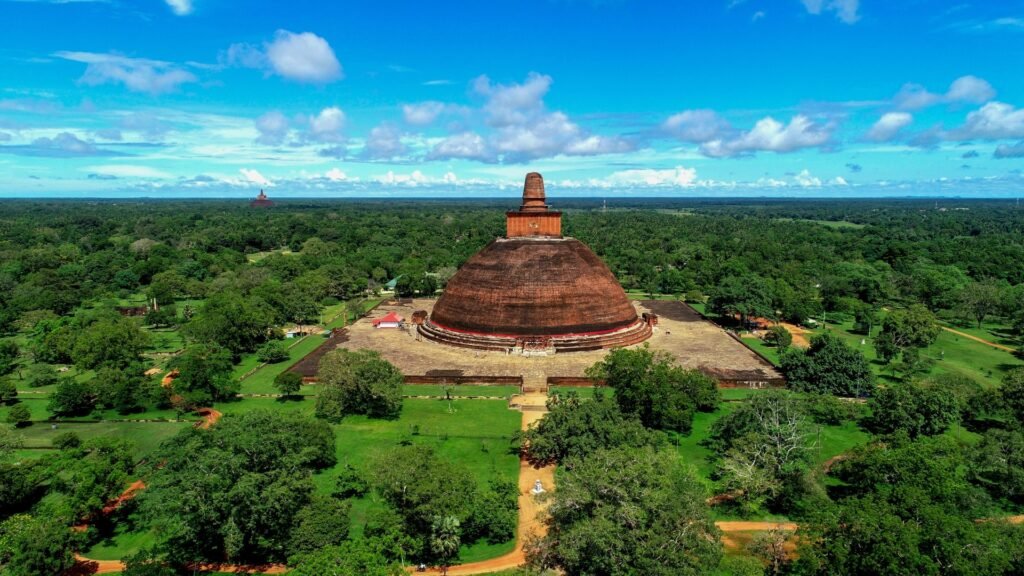
The island’s first great capital ruled for over a thousand years, and its scale still surprises: colossal brick stupas, monastic complexes, bathing ponds and the sacred Sri Maha Bodhi, grown from a cutting of the tree under which the Buddha attained enlightenment. It is a living pilgrimage site as much as an archaeological one.
Yapahuwa
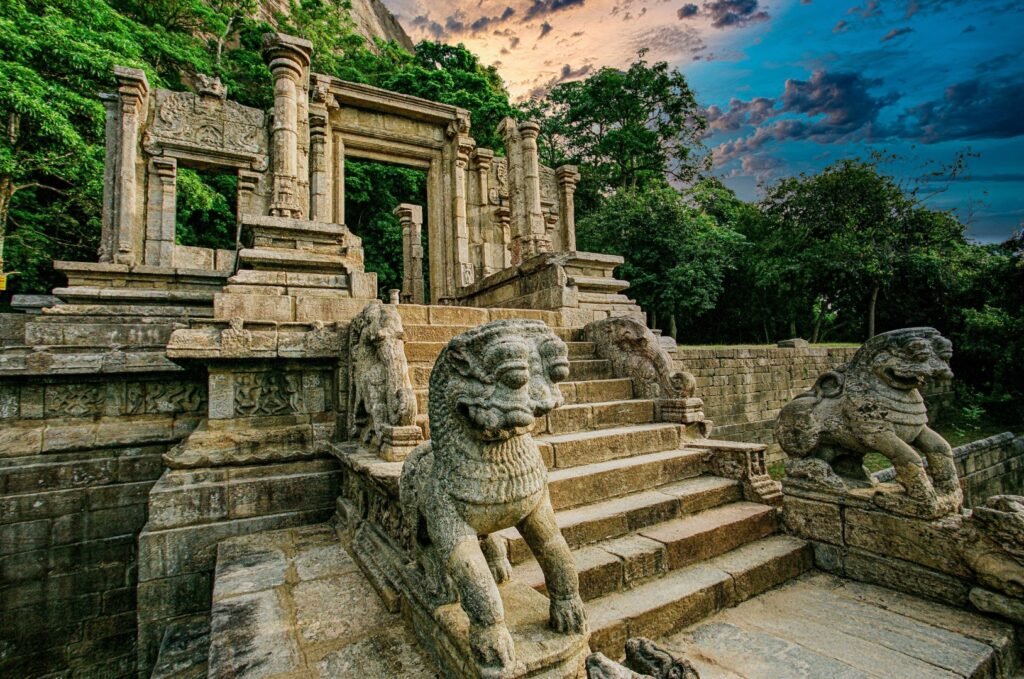
A dramatic and largely overlooked 13th-century rock citadel that briefly housed the Sacred Tooth Relic. Its ornamental stone stairway, carved with lions, dancers and musicians, is among the finest examples of Sinhalese sculpture anywhere on the island. You will often have the site almost entirely to yourself.
Dambulla Cave Temple
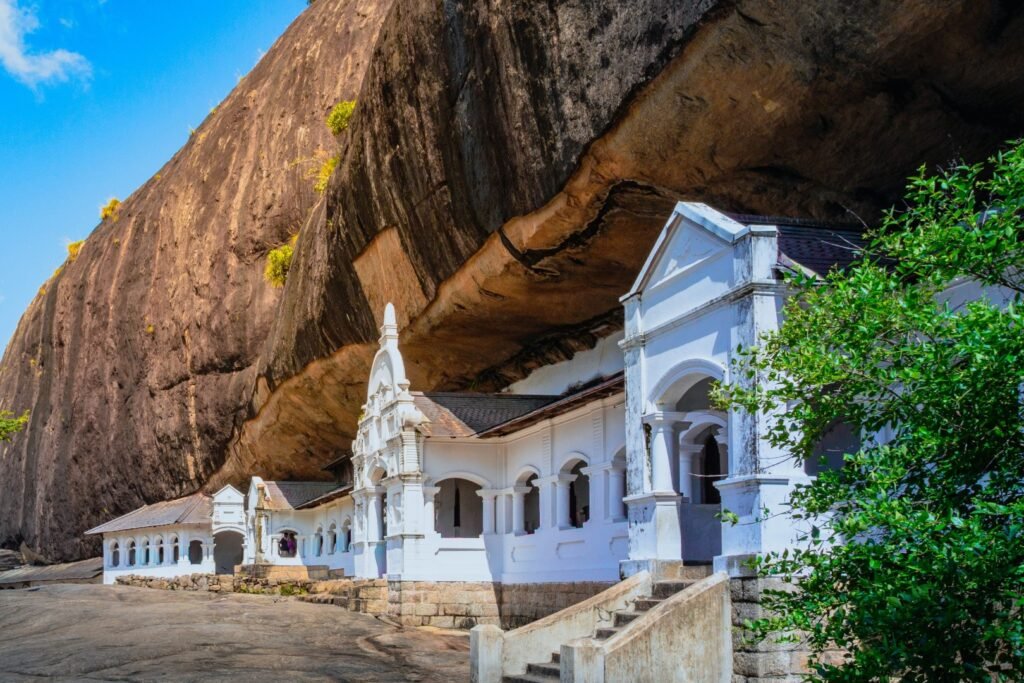
Five interconnected caves beneath a granite overhang hold more than 150 Buddha images and some of Asia’s finest surviving rock-ceiling murals, painted and repainted across two millennia. The short stair climb is rewarded with sweeping views across the dry zone plains. It remains an active place of worship, so modest dress is required.
Sigiriya
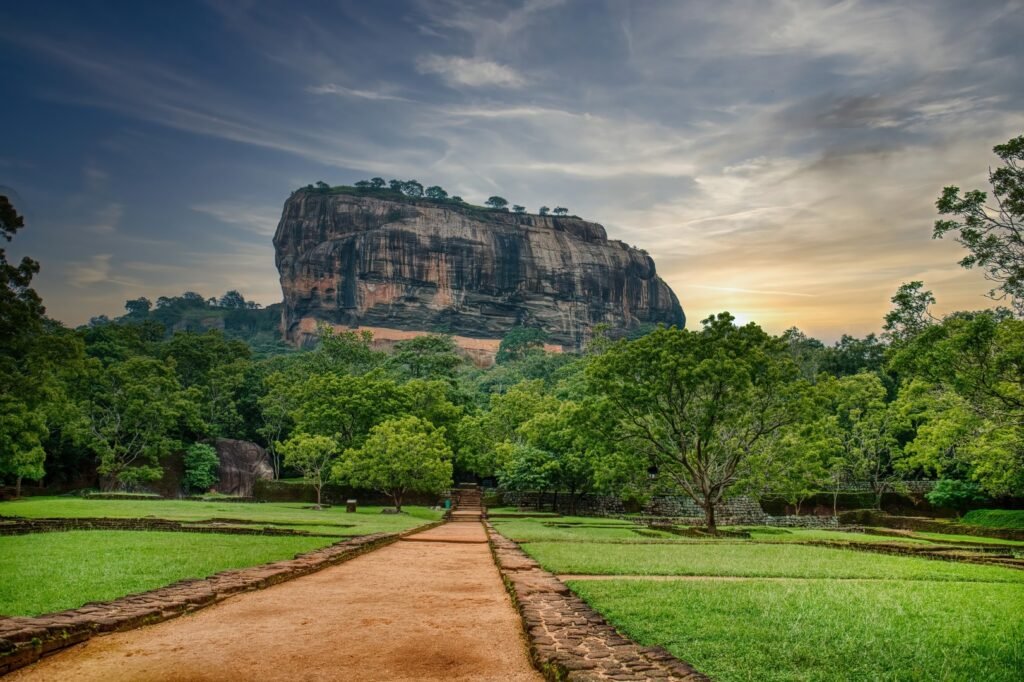
The 5th-century rock fortress of King Kashyapa rises 200 metres from the surrounding jungle and remains the single most striking sight in the country. The climb passes mirror-polished walls, the famous cloud maiden frescoes and the great lion’s paws before opening onto summit palace ruins and an enormous view. Nearby Pidurangala offers the best photograph […]
Polonnaruwa
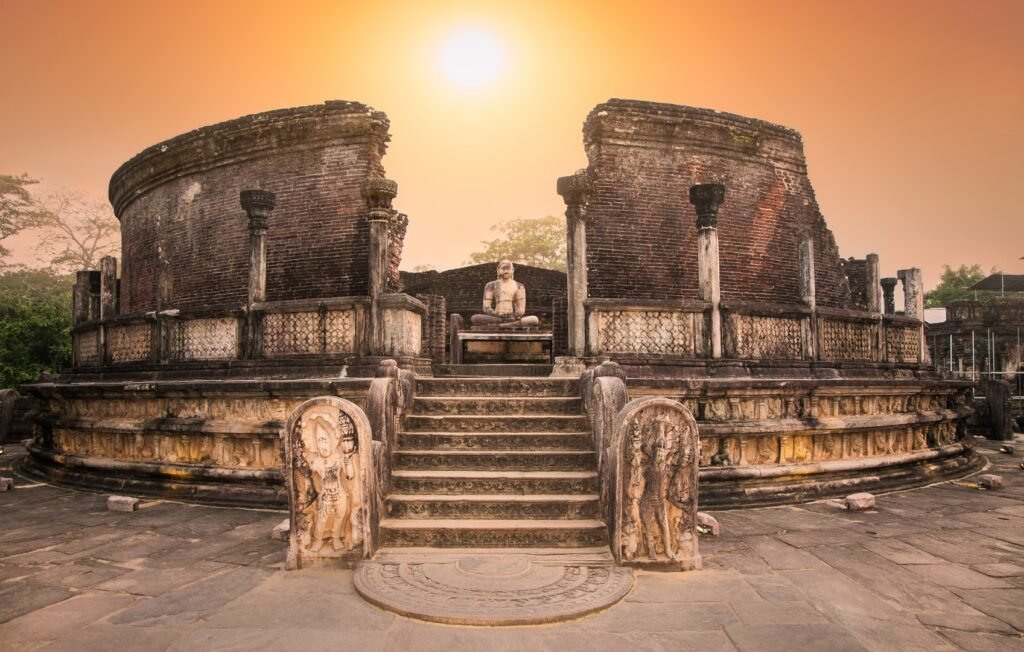
Sri Lanka’s second ancient capital is the most complete and walkable of its ruined cities, best explored slowly by bicycle. The Gal Vihara rock sculptures, the Royal Palace complex and the vast Parakrama Samudra reservoir show a 12th-century kingdom at its confident peak. Shaded paths and troops of monkeys come as standard.